


Life Planner: Your Blueprint for Intentional Living
Ever feel like you're running through life on autopilot, checking off tasks without really asking yourself if they matter? You're not alone. Most of us spend more time planning our grocery lists than we do planning our actual lives. But here's the thing: when you don't have a clear vision for where you're going, you end up wherever the current takes you. That's where a life planner becomes your secret weapon for taking back control and creating a life that actually reflects your priorities.
What Makes a Life Planner Different from a Regular Planner
You might be wondering, "Isn't a life planner just another planner?" Not quite. While your typical planner focuses on appointments and to-do lists, a life planner takes a holistic approach to your entire existence.
Think of it this way: a regular planner tells you what to do today. A life planner helps you figure out why you're doing it in the first place.
The Big Picture Perspective
A life planner encourages you to zoom out and look at all the areas of your life simultaneously. Instead of just tracking work deadlines, you're considering your health goals, relationship priorities, personal development, financial objectives, and creative pursuits all in one place.
This comprehensive view helps you spot imbalances before they become problems. Maybe you've been crushing it at work but neglecting your fitness. Or perhaps you're so focused on everyone else's needs that your own dreams are gathering dust.

Building Your Life Planning Foundation
Before you dive into daily scheduling, you need to establish what actually matters to you. This is where most people skip ahead and miss the magic. Without this foundation, your planner becomes just another place to write lists that don't move you forward.
Identifying Your Core Values
Start by asking yourself some tough questions. What do you want people to say about you when you're not in the room? What would you do if money wasn't a factor? What makes you lose track of time because you're so engaged?
Your answers reveal your core values, and these become your compass. When you're making decisions about how to spend your time, energy, and resources, your values guide you toward choices that feel aligned rather than draining.
Research shows that understanding life event choices through causal modeling can help people make more informed decisions about their futures. It's not about predicting everything perfectly but about understanding the patterns that shape your life trajectory.
Setting Meaningful Goals Across Life Domains
Once you know your values, translate them into concrete goals. But here's the key: don't just set goals in one area while ignoring others.
Your life planner should address:
- Career and professional growth
- Physical health and wellness
- Mental and emotional well-being
- Relationships and community
- Financial stability and abundance
- Personal development and learning
- Creative expression and hobbies
- Contribution and legacy
Notice how none of these exist in isolation? Your health affects your work performance. Your relationships influence your happiness. Your financial stress impacts your creativity. A good life planner helps you see these connections.
Designing Your Daily Actions Around Long-Term Vision
This is where the rubber meets the road. You've got your vision and your goals, but how do you actually live them out day by day? The gap between intention and action is where most people lose momentum.
Breaking Down BIG Goals into Milestones
Twelve months feels abstract. Thirteen weeks feels manageable. When you break your yearly vision into quarterly chunks, you create natural checkpoints that keep you honest without overwhelming you.
For each quarter, identify 3-5 major milestones that will move you closer to your annual goals. Then break those milestones into monthly or weekly objectives and daily actions. Suddenly, that intimidating goal starts looking like a series of totally doable steps.
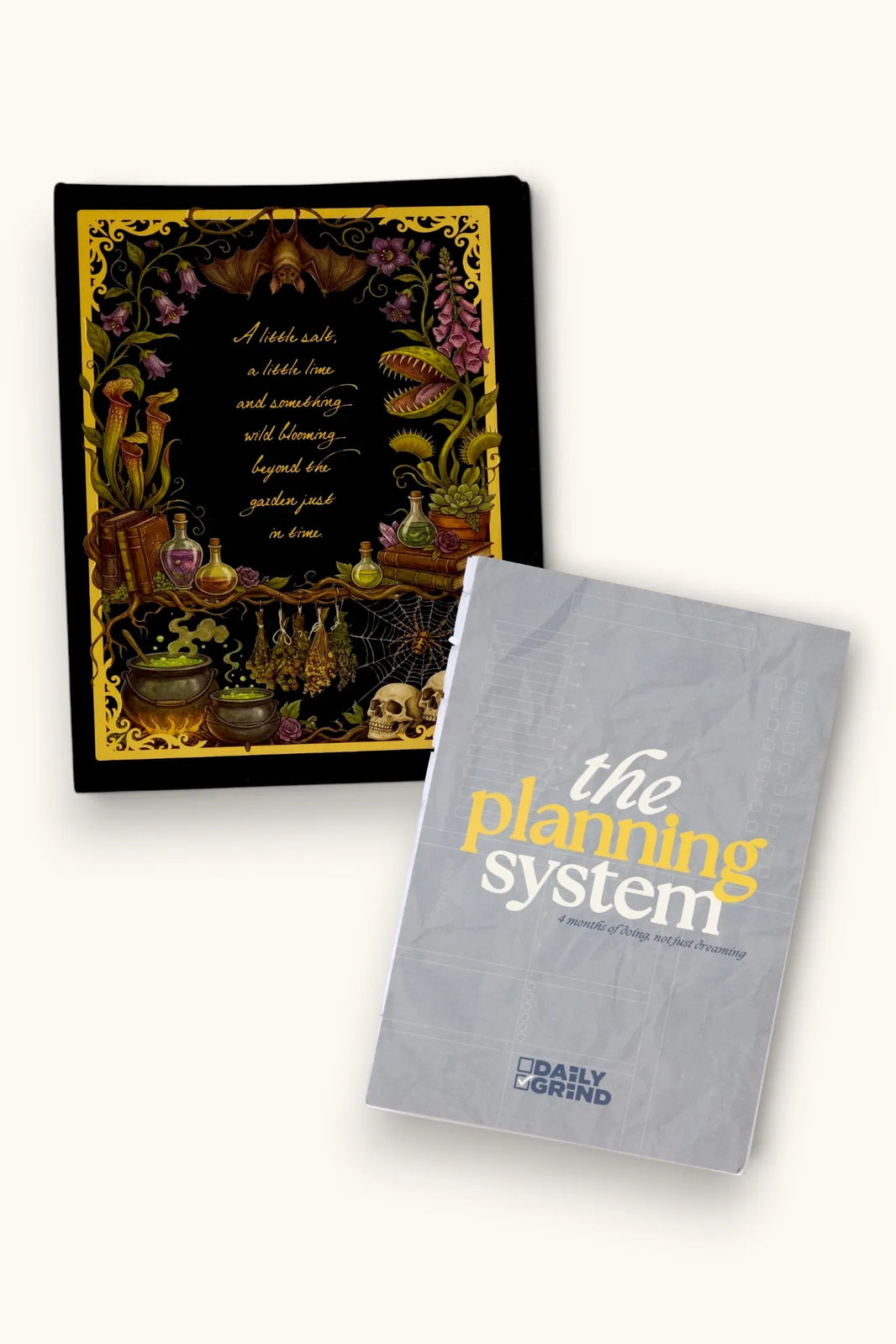
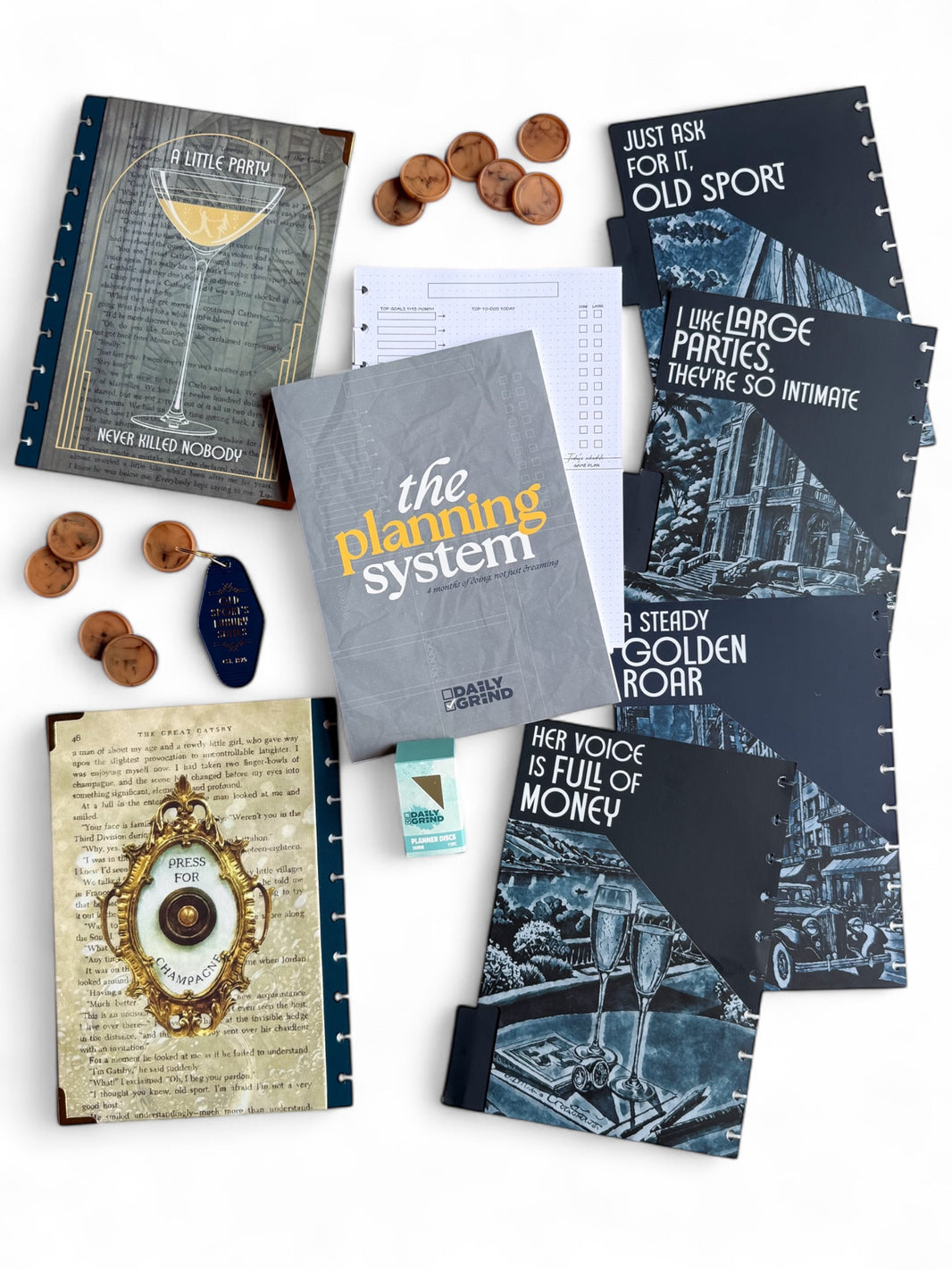
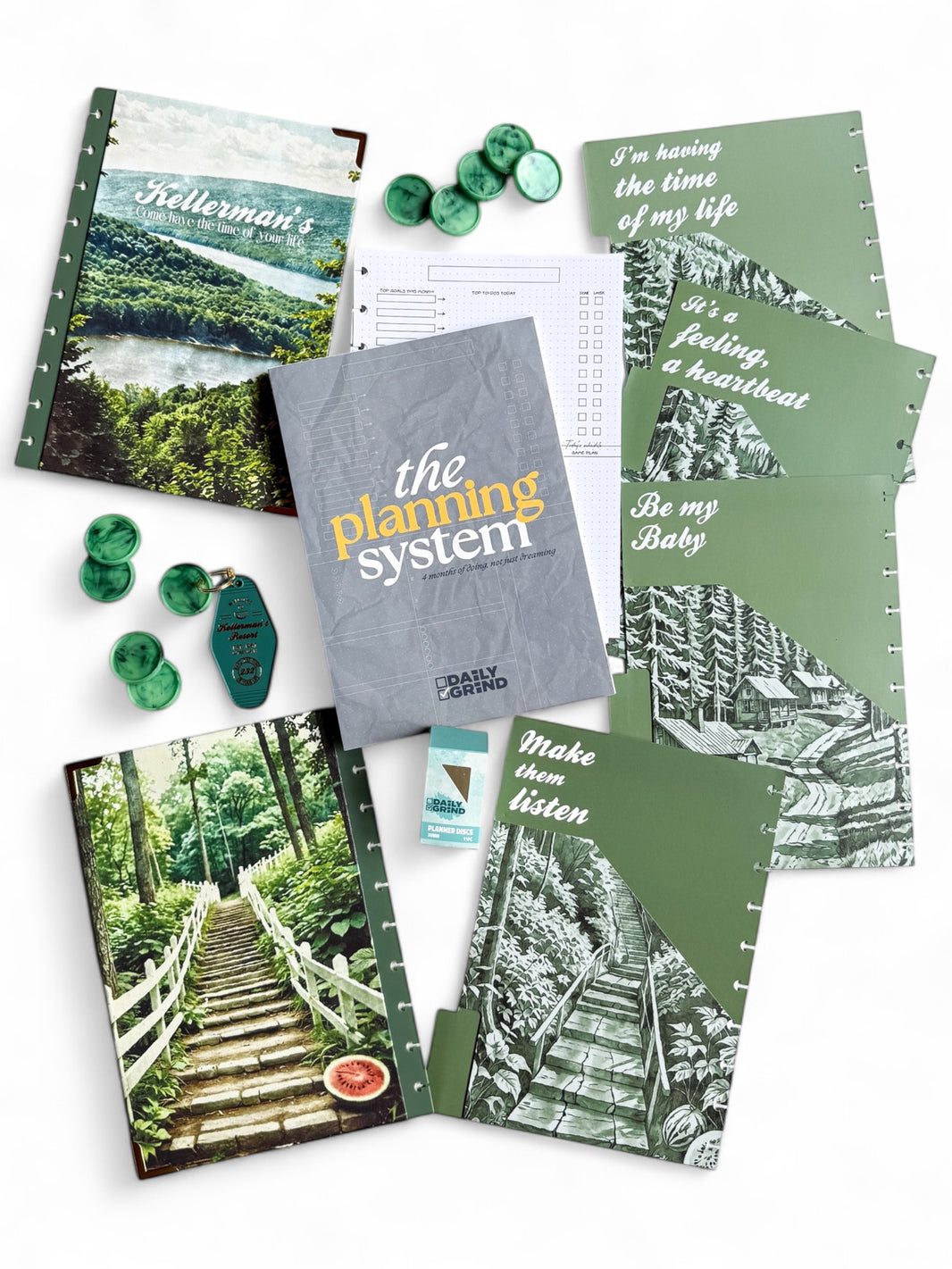
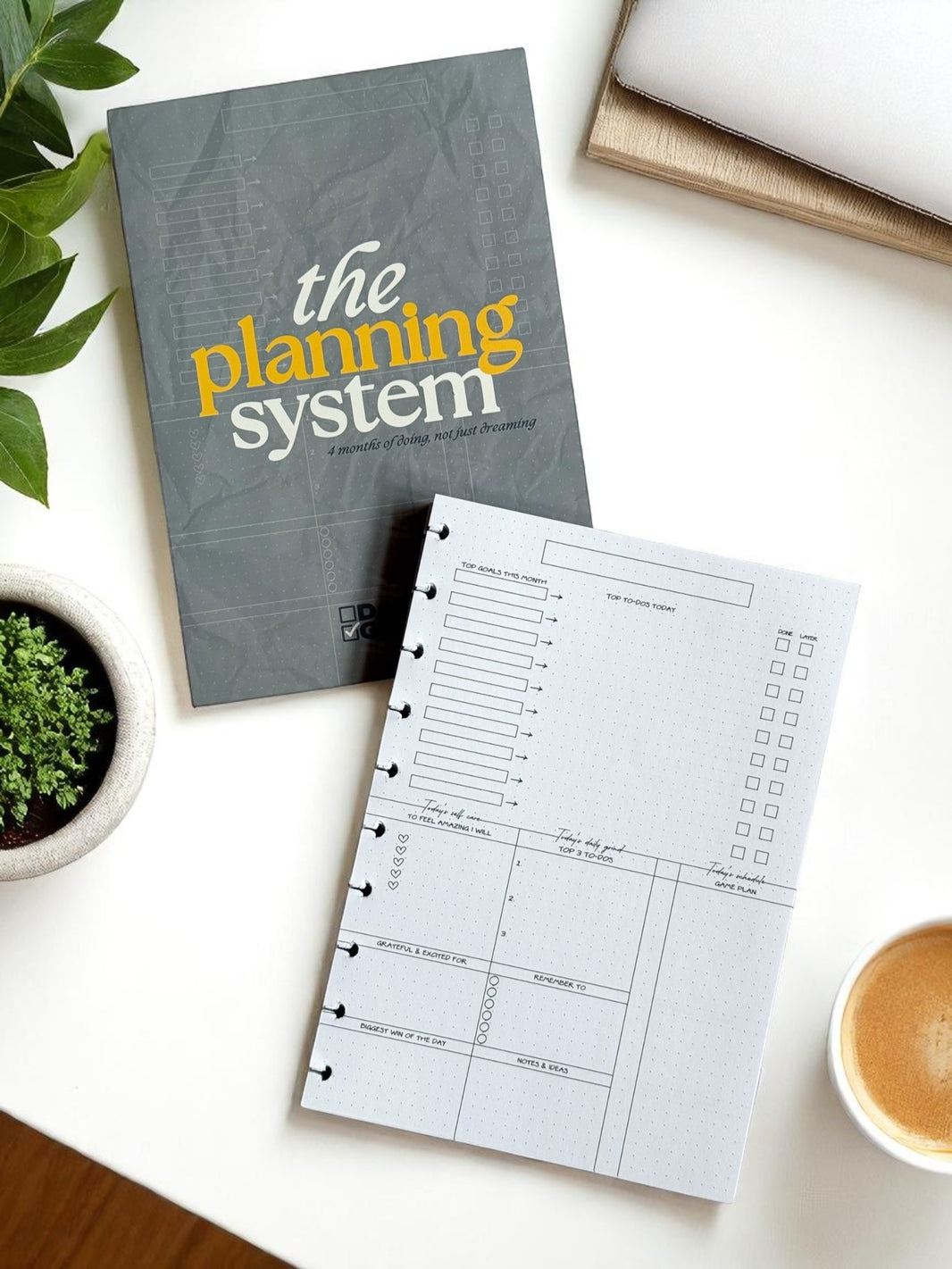
If you're looking for a structured approach to this breakdown, The Daily Grind 4-Month Planning System is designed specifically to help you map out your goals across a meaningful timeframe. This undated daily layout gives you the flexibility to start whenever you're ready while maintaining the structure to keep making progress.
Creating Habit Stacks That Support Your Vision
Goals are exciting, but habits are what actually change your life. Your life planner should include space for tracking the daily and weekly habits that align with your bigger vision.
Want to write a book? Your habit might be 30 minutes of writing before breakfast. Trying to improve your health? Maybe it's meal prepping every Sunday and moving your body for 20 minutes daily. Building better relationships? Perhaps it's putting your phone away during dinner and having one meaningful conversation each day.
The trick is connecting these habits directly to your values and goals. When you can draw a clear line from "I meditated for 10 minutes this morning" to "I value mental clarity and peace," the habit becomes meaningful rather than just another box to check. You can explore more about habit tracking strategies to find what works best for your lifestyle.
Organizing the Chaos: Life Planner Layouts That Work
Not all life planner formats are created equal, and what works for your best friend might drive you absolutely crazy. The key is finding a layout that matches how your brain actually works.
Comparison of Popular Life Planner Formats
| Format Type | Best For | Key Features | Potential Drawbacks |
|---|---|---|---|
| Vertical Layout | Visual thinkers who like seeing time blocks | Clear time segments, easy to see schedule at a glance | Can feel restrictive if your days vary widely |
| Horizontal Layout | People who plan by category rather than time | Flexible sections, customizable | May lack structure for time-sensitive tasks |
| Bullet Journal Style | Creative planners who like customization | Total flexibility, combines planning with reflection | Requires more setup time, can become overwhelming |
| Guided System | Beginners or those who want structure | Pre-designed prompts and sections | Less flexibility for unique needs |
Your life planner might combine elements from different formats. The important thing is that it serves you, not the other way around.
Essential Sections Every Life Planner Needs
While your specific layout is personal, certain elements appear in most effective life planners:
- Vision and values page - Your north star when you feel lost
- Annual overview - The helicopter view of your year
- Quarterly planning - Mid-range goals and milestones
- Monthly calendar - Big picture scheduling and deadlines
- Weekly spread - Detailed planning and preparation
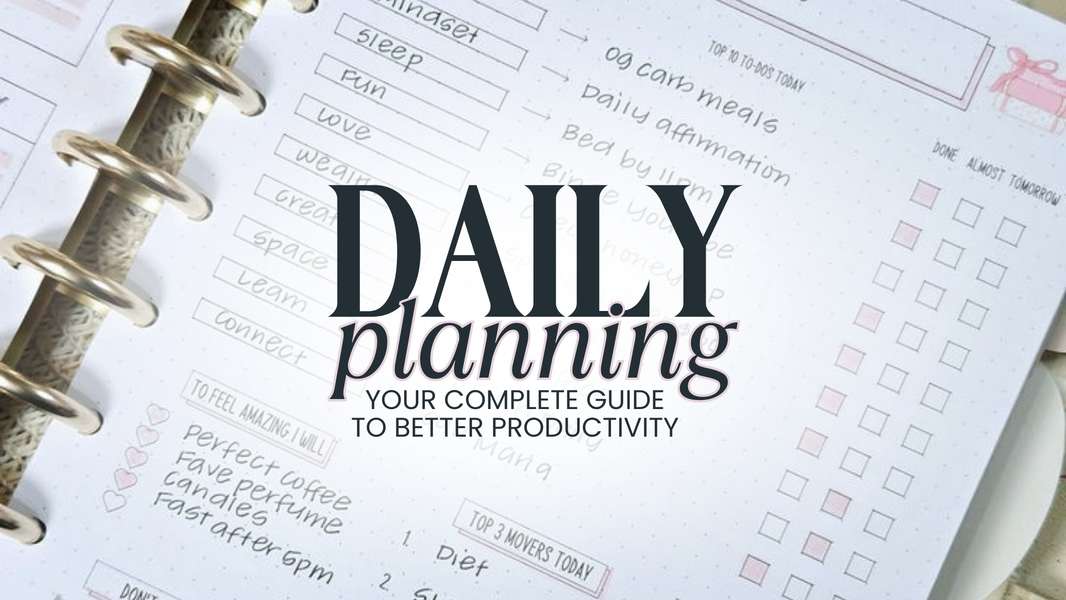
- Daily pages - Hourly scheduling, priorities, and reflection
- Habit trackers - Visual accountability for daily practices
- Notes and brainstorming space - Because ideas don't follow schedules
- Review and reflection pages - Learning from what worked (and what didn't)
The magic happens when these sections talk to each other. Your daily actions should clearly connect to your weekly priorities, which support your monthly goals, which build toward your quarterly milestones, which create your annual vision.
Making Your Life Planner Actually Work for You
Let's be honest: you've probably started planners before that ended up abandoned by February. The problem wasn't you, it was probably the approach. A life planner only works if you actually use it, so let's talk about building sustainable planning practices.
Finding Your Planning Rhythm
Some people swear by planning every Sunday evening. Others prefer a quick morning review. Some folks need to sit down once a month for a deep planning session. There's no universal right answer.
Experiment with different timing until you find what sticks. Maybe you're a morning person who thinks clearly with coffee and a fresh mind. Or perhaps you're an evening reflector who processes the day best after dinner. Work with your natural rhythms instead of fighting them.
Try these planning frequencies:
- Daily: 5-10 minutes to review priorities and schedule
- Weekly: 30-60 minutes to plan the week ahead and review the previous week
- Monthly: 1-2 hours to assess progress and adjust goals
- Quarterly: 2-3 hours for deep reflection and replanning
- Annually: A half-day to envision the year ahead
Building Accountability Into Your System
A life planner sitting unopened on your desk won't change anything. You need accountability mechanisms built right into your practice.
Some people find accountability through tracking streaks. How many consecutive days have you checked in with your planner? Others prefer sharing goals with a friend or partner who asks about progress. Some join planning communities online where people share their systems and encourage each other.
Studies on resilience interventions show that long-term tracking of progress significantly impacts outcomes. When you can see how far you've come, you're more likely to keep going.
Customizing Your Life Planner for Different Life Stages
Your life planner should evolve as you do. What worked when you were single and childless won't necessarily serve you as a parent. The planner that supported you through college might not fit your entrepreneurial journey.
Life Planners for Major Transitions
Certain life moments require extra planning attention. Starting a new job, getting married, having a baby, moving to a new city, launching a business, going back to school, caring for aging parents - these transitions turn your routine upside down.
During major transitions, your life planner becomes your anchor. It helps you maintain some areas of your life while adapting others. You might need to temporarily lower your fitness expectations while adjusting to a newborn, but your planner ensures you don't lose sight of that goal entirely.
Adapting Your System as Priorities Shift
Remember those values you identified at the beginning? They might shift over time, and that's completely okay. Your life planner should be flexible enough to accommodate those shifts.
Maybe career advancement was your top priority in your twenties, but now family time ranks higher. Perhaps you spent years focused on building financial security and you're ready to prioritize creative expression. Your planner should reflect these evolving priorities, not trap you in outdated goals.
Integrating Digital and Paper Planning
We live in 2026, and the debate about digital versus paper planning is pretty much settled: why not both? The best life planner system often combines the strengths of each format.
When to Use Digital Tools
Digital planning excels at certain tasks. Shared calendars help coordinate with partners and family. Apps can send reminders for time-sensitive items. Digital tools make it easy to search through past notes and reschedule repeating tasks.
Research into technology-integrated planning tools shows that digital systems can enhance planning effectiveness when designed thoughtfully. The key is choosing tools that genuinely help rather than adding complexity.
Digital tools work well for:
- Shared schedules and coordination
- Automatic reminders and alerts
- Long-term reference and searching
- Linking to resources and documents
- Quick capture when you're away from your planner
The Irreplaceable Benefits of Paper
But here's what digital can't quite replicate: the physical act of writing helps you remember better. There's something about seeing your week at a glance on paper that your brain processes differently than scrolling through a screen. And let's not pretend we all don't check our phones way more than necessary when they're our planning hub.
Paper planning creates a distraction-free zone. When you sit down with your physical planner, you're not one notification away from falling down a social media rabbit hole. You're present with your life, your goals, and your choices.
Many people find success using digital for scheduling and logistics while keeping their deeper life planning, reflection, and goal-tracking on paper. Browse through Daily Grind Planner accessories to find tools that enhance your paper planning practice.
Tracking Progress Without Perfectionism
Here's where a lot of people sabotage their own success: they turn their life planner into a tool for self-criticism instead of self-improvement. Every unchecked box becomes evidence of failure. Every missed goal proves they're not good enough.
Reframing How You View Incomplete Tasks
What if incomplete tasks are actually data rather than failure? When you don't follow through on something, that's information about your priorities, your capacity, or the goal itself.
Maybe that task wasn't as important as you thought. Maybe you need to break it down into smaller steps. Maybe external circumstances changed and the goal needs adjusting. Or maybe you're simply trying to do too much and need to be more selective.
Your life planner should help you learn these lessons, not beat yourself up about them.
Celebrating Small Wins
Progress isn't linear, and your planning practice should acknowledge that. Build celebration into your system. When you complete a weekly habit streak, mark it somehow. When you achieve a monthly milestone, take a moment to appreciate it.
| Progress Marker | Celebration Idea |
|---|---|
| Completed a challenging week | Favorite meal or treat |
| Finished a monthly goal | Evening doing something you love |
| Quarterly milestone reached | Splurge on something meaningful |
| Annual vision achieved | Bigger celebration or experience |
These celebrations reinforce the behavior you want to continue. They remind you that the planner is working and your effort matters.
Life Planning for Specific Goals
While a life planner covers all areas of your life, you might have specific goals that need extra attention. Let's look at how to use your planner for common focus areas.
Health and Wellness Planning
Your physical and mental health deserve dedicated space in your life planner. This goes beyond just tracking workouts (though that's useful too).
Consider tracking sleep patterns, water intake, meal planning, stress levels, and mood. Look for patterns over time. Do you notice your energy crashes mid-afternoon on days you skip breakfast? Does your mood improve significantly on weeks when you move your body regularly?
Your life planner becomes a health detective, helping you connect cause and effect across weeks and months. This longitudinal view is something daily apps can't quite replicate.
Career and Financial Life Planning
Professional growth and financial stability often intertwine in your planner. You might track skill development, networking activities, project deadlines, and income goals alongside expense tracking, savings progress, and investment planning.
Career planning elements:
- Skill development goals and courses
- Networking contacts and follow-ups
- Project timelines and deliverables
- Performance review preparation
- Professional reading and learning
Financial planning elements:
- Monthly budget and actual spending
- Savings goals and progress
- Debt reduction tracking
- Investment contributions
- Major purchase planning
Relationship and Community Building
We often plan everything except our most important relationships. Your life planner should include intentional space for the people who matter most.
This might look like scheduling regular date nights with your partner, planning phone calls with long-distance friends, tracking when you last reached out to certain people, or planning family activities. It could include community involvement, volunteer commitments, or social events that align with your values.
Research on independent living planning for young adults shows that personalized planning tools significantly improve quality of life when they address social connections alongside practical goals.
Common Life Planner Mistakes to Avoid
Even with the best intentions, it's easy to fall into planning traps that undermine your success. Let's talk about the most common ones so you can sidestep them.
Over-Planning and Under-Living
There's a point where planning becomes procrastination in disguise. You spend so much time perfecting your color-coded system and writing beautiful goals that you never actually do the work.
Your life planner is a tool, not the destination. If you find yourself spending more time planning than doing, it's time to scale back. Sometimes "good enough" planning that actually gets used beats "perfect" planning that paralyzes you.
Ignoring the Review Process
Planning forward is only half the equation. Regular review of what actually happened is where the real growth lives. When you skip reviewing, you miss the patterns, the lessons, and the wins.
Set up a consistent review rhythm. What went well this week? What would you do differently? What surprised you? What patterns are you noticing? These reflections make your future planning exponentially more effective.
Treating Your Planner as Unchangeable
Life happens. Plans change. Your planner should be flexible enough to roll with the punches without making you feel like you've failed.
Build white space into your schedule. Leave room for the unexpected. When something doesn't go according to plan, adjust and move forward. The goal isn't to predict everything perfectly - it's to stay intentional even when circumstances shift.
Making Your Life Planner a Sustainable Practice
The ultimate measure of a life planner's success isn't how beautiful it looks or how detailed your system is. It's whether you're actually using it to create a life that feels aligned with your values and priorities.
Starting Small and Building Momentum
If you're new to life planning, don't try to implement everything at once. Start with one or two elements that feel most urgent. Maybe it's just weekly planning and monthly goal review. As that becomes habit, add more layers.
You might begin by simply tracking how you currently spend your time for a few weeks. This awareness alone often sparks changes. Then introduce goal-setting. Then add habit tracking. Then incorporate reflection. Build gradually.
Finding Your Planning Community
Planning can feel lonely when you're doing it solo. Connect with others who value intentional living. This might be an online community, a local planning group, or even just one friend who also uses a life planner.
Share what's working and what isn't. Celebrate wins together. Troubleshoot challenges. Learn from each other's systems. The Daily Grind Planner community offers resources and inspiration for people committed to putting themselves first and building lives they love.
Trusting the Process
Here's the truth: your first year of life planning probably won't be perfect. You'll experiment with different layouts, timing, and approaches. You'll overcomplicate some things and oversimplify others. You'll have weeks where your planner sits untouched and weeks where you can't imagine functioning without it.
That's all part of the process. Life planning is a practice, not a one-time event. The more you do it, the better you'll understand what works for your unique brain, schedule, and goals. Give yourself grace to figure it out as you go.
Life planning isn't about achieving some impossible standard of perfection or productivity. It's about being intentional with the one life you've got, making choices that align with what matters most to you, and creating space for the things and people that bring meaning. Whether you're just starting out or refining a system you've used for years, the act of planning itself is an investment in your future self. At Daily Grind Planner, we create tools specifically designed to help you stay focused on your priorities and build a life that truly reflects who you are and what you value. Ready to start putting yourself first?
Tags:
Previous
Planning Daily: Your Complete Guide to Better Productivity
Next
Notes from Angie #1: Why I Revisit My Top 10 Goals Every 4 Months